
Daptomycin | Lipopeptide Antibiotic | Gram-Positive Research | Science-Peptide
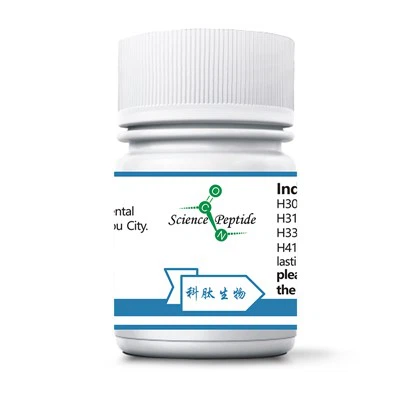
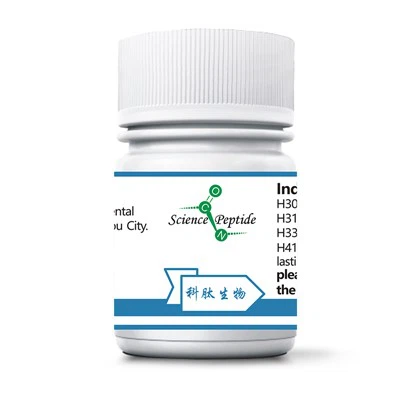
【Properties】White or off-white powder
【Purity】≥95%
【Package】5mg, 10mg
【Storage】2-8℃, Storage -20℃, sealed storage
【More Information] Peptide price, sequence information, chemical structure, molecular weight, scientific research literature, please email inquiry
Daptomycin is a cyclic lipopeptide antibiotic from Streptomyces roseus, consisting of a cyclic peptide core of ten amino acids with a fatty acid side chain. Its action is different from that of β-lactam or glycopeptide antibiotics, mainly relying on calcium ions to achieve targeted attack on the bacterial cell membrane, with rapid bactericidal activity against a variety of drug-resistant Gram-positive bacteria, including MRSA, VRE. Daptomycin is a high-purity synthetic peptide, which is only for in vitro and animal experiments and other scientific research use, and cannot be used for human treatment.

Mechanism of action:Calcium-dependent membrane depolarization
The bactericidal process of Daptomycin begins with the presence of calcium ions. At physiological concentrations of calcium ions (about 50 mg/L), antibiotic daptomycin undergoes a conformational change that results in the formation of transmembrane oligomeric pores in bacterial cell membranes containing phosphatidylglycerol (PG).Silverman et al. (2003), in Antimicrobial Agents and Chemotherapy, stated that Daptomycin is effective against Staphylococcus aureus. In Antimicrobial Agents and Chemotherapy, Silverman et al. (2003) showed that the bactericidal activity of Daptomycin against S. aureus had a clear time-dependent and dose-dependent relationship with the dissipation of the membrane potential: at a concentration of 5 μg/mL, the cell viability was decreased by more than 99% within 30 min, while the membrane potential was increased by more than 90%. Pore formation led to rapid K⁺ efflux, which in turn inhibited DNA, RNA and protein synthesis, ultimately killing the bacteria. Unlike most cationic antimicrobial peptides, Daptomycin is an anionic molecule that must rely on calcium ions to exert membrane-targeting effects, a unique mechanism that makes it an important model molecule for the study of membrane-active antibiotics.
In vitro antimicrobial activity data
Daptomycin showed very low minimum inhibitory concentrations (MICs) against common clinical Gram-positive aerobic bacteria.Fuchs et al. (2000) examined 514 clinical isolates and found that the MICs of all tested strains were ≤2 mg/L, with only a few strains of E. faecalis and Listeria monocytogenes reaching 4 mg/L.The MICs of MSSA and MRSA ranged from 0.03-0.5 mg/L, E. faecalis and E. faecalis (including vancomycin-resistant strains) were 0.25-2 mg/L, β-hemolytica and E. faecalis (including vancomycin-resistant strains) were 0.03-0.5 mg/L for MSSA and MRSA, 0.25-2 mg/L for E. faecalis and E. faecalis (including vancomycin-resistant strains), and 0.016-0.25 mg/L for Streptococcus β-hemolyticus. It is worth noting that the MICs of Daptomycin were similar to those of methicillin or vancomycin resistance. Notably, the MIC of Daptomycin did not correlate with the resistance phenotypes of methicillin or vancomycin, suggesting that its activity against MRSA and VRE is not affected by pre-existing resistance mechanisms.Cilli et al. (2006) also confirmed that all the tested strains were susceptible to Daptomycin in an in vitro study of 42 VRE, 30 MRSA and 36 MRSE strains.The results of an in vitro study of 42 VRE, 30 MRSA and 36 MRSE strains showed that all the strains were susceptible to Daptomycin.


The main directions of scientific applications
1. Research on multidrug-resistant bacterial infections
Daptomycin is approved for the treatment of complicated skin and soft tissue infections, Staphylococcus aureus bacteremia and right-sided infective endocarditis. As of 2010, approximately 1 million patients worldwide with severe Gram-positive bacterial infections have been treated with antibiotic daptomycin. In the research setting, it is often used as a positive control against MRSA and VRE, or to explore novel combination therapies.
2. Biofilm-associated infections
The treatment of medical device-associated infections is particularly problematic due to the high biofilm formation capacity of Enterococcus faecalis.Barber et al. (2021) used a biofilm time-kill curve method to assess the activity of Daptomycin co-administration on VRE in biofilms. They found that the MIC (bMIC) in biofilms was 2-8-fold higher than the normal MIC, indicating that biofilms significantly reduced drug sensitivity. However, when antibiotic daptomycin was combined with ceftriaxone, ampicillin or rifampicin, the bMIC was reduced by ≥2-fold and showed synergistic bactericidal effects against most of the tested strains (≥2 log₁₀ CFU/cm² compared to the single agent). These data provide an important reference for the study of anti-biofilm strategies.
3. Research on drug resistance mechanisms
Daptomycin resistance studies have focused on the two-component regulatory system of mprF and VraSR. Mehta et al. (2012) found that mprF point mutations (e.g., L826F) were directly associated with antibiotic daptomycin resistance phenotypes in clinical MRSA strains, and that activation of the VraSR system was a key synergistic factor in drug resistance. Inactivation of VraSR significantly increased Daptomycin susceptibility, while resistance was restored after backfilling. These findings provide a molecular basis for understanding the adaptive response of bacteria to membrane-targeted antibiotics.
4. Combined drug screening
The synergistic effect of Daptomycin with β-lactams, rifampicin and aminoglycosides has been widely studied. In addition, chemical couplings of Daptomycin with silver nanoclusters have shown enhanced membrane-damaging ability in recent years. It is important to note that Daptomycin is not suitable for lung infection studies because it is bound to and inactivated by lung surface-active substances - the first reported case of organ-specific inactivation of an antibiotic.
Preservation and use recommendations
Lyophilized powder is recommended to be stored at -20℃, avoiding repeated freezing and thawing. After dissolution, it can be dispensed at -80℃ for long-term storage. Researchers should pre-validate the activity of Daptomycin according to the specific experimental system (e.g., calcium ion concentration, medium composition), because the calcium ion level directly affects its bactericidal effect.
Core Advantages of Science-Peptide in Catalog Peptides
Strict quality control
Ensured by mass spectrometry (MS), HPLC and COA QC report.
Flexible customization
Support 200+ modifications such as biotin labeling, fluorescent labeling (FITC/Cy5), polyethylene glycolation (PEGylation), etc. to personalize experimental needs.
Full field coverage
Provide 7500+ catalog peptides, Antimicrobial Peptides, Cell-adhesion Peptides, Inhibitors and Substrates, etc., which can help interdisciplinary research.
Authoritative certification
More than 20+ years in the peptide field, with 28 patented technologies, international ISO certification, national high-tech enterprises.
References
- Silverman JA, et al. Antimicrob Agents Chemother. 2003;47(8):2538-2544.
- Fuchs PC, et al. J Antimicrob Chemother. 2000;46(3):443-447.
- Cilli F, et al. J Chemother. 2006;18(1):27-32.
- Barber KE, et al. Antibiotics. 2021;10(8):897.
- Mehta S, et al. Antimicrob Agents Chemother. 2012;56(1):92-102.
- Silverman JA, et al. J Infect Dis. 2005;191(12):2149-2152.
Keywords
Daptomycin, lipopeptide antibiotic, membrane depolarization, MRSA, Gram-positive bacteria
Hot Tags: daptomycin, China daptomycin manufacturers, suppliers, factory, antibiotic daptomycin, b sulfate, catalog peptides, polimiksin b sulfate, Polymyxin B Sulfate, Thiostrepton