Product Overview
Anti-cancer peptides (ACPs) function as targeted biological tools in oncology research, primarily classified into cell-penetrating anticancer peptides, tumor-homing peptides, and host defense-derived peptides. Unlike conventional chemotherapeutic agents, synthetic ACPs are engineered to interact directly with cancer cell membranes through electrostatic and hydrophobic interactions, inducing membrane lysis or receptor-mediated apoptosis.
At Scipeptide, we synthesize custom anti-cancer peptide sequences ranging from linear oligomers to complex cyclic structures. Every batch is produced under strict solid-phase peptide synthesis (SPPS) protocols, delivered with full analytical validation including high-performance liquid chromatography (HPLC) traces and mass spectrometry (MS) confirmation.
-
![Leuprolide Acetate CAS 1926163-25-8]() Leuprolide Acetate CAS 1926163-25-8Leuprolide--Supporting generic drug development, microsphere formulation, impurity studies, Science-Peptide offers high purity Leuprolide Acetate in grams to kilograms, with complete structural
-
![Triptorelin Acetate CAS 57773-63-4]() Triptorelin Acetate CAS 57773-63-4Triptorelin Acetate CAS 57773-63-4--Supporting generic drug development, microsphere formulation, impurity control studies, Science-Peptide provides high purity Triptorelin Acetate in milligrams to
-
![Goserelin Acetate CAS 145781-92-6]() Goserelin Acetate CAS 145781-92-6Goserelin Acetate CAS 145781-92-6 research grade peptide - support implant process development, generic research, impurity controls. Goserelin Acetate is available in grams to kilograms of high


Product Types & Available Options
We provide customized synthesis and bulk batch production for various functional classes of anti-cancer peptides:
• Membrane-Lytic / Amphipathic Peptides: Helical structures (e.g., LfcinB derivatives, Cecropin analogs) designed to disrupt negatively charged cancer cell membranes.
• Tumor-Homing & Receptor-Targeted Peptides: Sequence motifs engineered to bind specifically to tumor-associated antigens, VEGFR, or integrins for targeted delivery.
• Pro-apoptotic Peptides: Sequences designed to neutralize anti-apoptotic proteins (such as Bcl-2 family proteins) inside the cytosol.
• Angiogenesis Inhibitors: Peptides targeting endothelial cell proliferation within the tumor microenvironment.
Standard Modification Options:
• N-Terminal: Acetylation, FITC/FAM labeling, Biotinylation, Myristoylation.
• C-Terminal: Amidation (-NH2), Esterification, 7-Amino-4-methylcoumarin (AMC).
• Structural Constraints: Disulfide bond formation (Cys-Cys bridging), Head-to-tail cyclization.
• Counter-Ion Exchange: Trifluoroacetate (TFA) removal converted to Acetate (CH3COO-) or Hydrochloride (HCl) salts for biological assays.
Technical Specifications
|
Parameter |
Specification / Range |
Analytical Method |
|
Sequence Length |
5 to 60 amino acids |
Automated SPPS Synthesis Log |
|
Purity Grade |
Standard: >= 85%; High: >= 90%; Ultra: >= 95% to >= 98% |
Analytical HPLC (220 nm / 280 nm) |
|
Identity / Molecular Weight |
Confirmed within +/- 0.1% of theoretical mass |
Electrospray Ionization Mass Spectrometry (ESI-MS / MALDI-TOF) |
|
Peptide Content |
Typically 60% - 85% (net peptide weight) |
Amino Acid Analysis (AAA) / Elemental Analysis |
|
Form |
Lyophilized powder (white to off-white fluffy solid) |
Visual Inspection |
|
Solubility Guidelines |
Water, PBS, DMSO, or dilute acetic acid (sequence-dependent) |
Empirical Testing / Client Guidance |
|
Bacterial Endotoxin |
< 0.005 EU/ug (optional for cell-based assays) |
Limulus Amebocyte Lysate (LAL) Assay |
Applications
Our synthetic anti-cancer peptides are utilized across global academic institutions, biopharma R&D labs, and preclinical testing facilities for:
In Vitro Cytotoxicity & Cell Viability Assays:
Evaluating half-maximal inhibitory concentration (IC50) values against human cancer cell lines (e.g., MCF-7, HeLa, A549) via MTT/MTS assays.
Apoptosis Pathway Analysis:
Assessing caspase activation, mitochondrial membrane potential disruption, and phosphatidylserine externalization via flow cytometry.
Peptide-Drug Conjugate (PDC) Development:
Utilizing tumor-homing sequences as carrier vectors to deliver cytotoxic payloads directly to tumor sites.
In Vivo Xenograft Efficacy Studies:
Evaluating tumor growth inhibition, biodistribution, and systemic toxicity in murine models.

Complex sequences require tailored synthetic pathways to overcome aggregation, steric hindrance, or difficult couplings.
Synthesis Scale: From 1 mg screening scales to multi-gram preclinical and clinical-trial support quantities.
Coupling Chemistry: Fmoc solid-phase synthesis utilizing optimized activating reagents (HBTU, HATU, DIC/Oxyma) to minimize deletion sequences and racemes.
Difficult Sequence Handling: Microwave-assisted SPPS for aggregation-prone hydrophobic sequences, pseudoproline dipeptides, and segment condensation strategies for long chains (> 50 residues).
Purification Optimization: Reversed-phase preparative HPLC (RP-HPLC) utilizing volatile buffer systems (acetonitrile/water with TFA or acetic acid) tailored to the peptide's isoelectric point.
Every synthesized batch undergoes rigorous analytical testing before release.
Analytical Package Included:
Certificate of Analysis (CoA) detailing net peptide weight, moisture content, and counter-ion type.
Analytical HPLC chromatogram confirming purity percentage.
Mass Spectrometry (MS) spectrum verifying molecular weight.
Traceability & Instrumentation: Synthesized using automated peptide synthesizers (AAPPTec/Gyros Protein Technologies platforms) and analyzed on Shimadzu/Agilent LC-MS systems calibrated annually under internal ISO-aligned SOPs.

Packaging, Storage & Handling
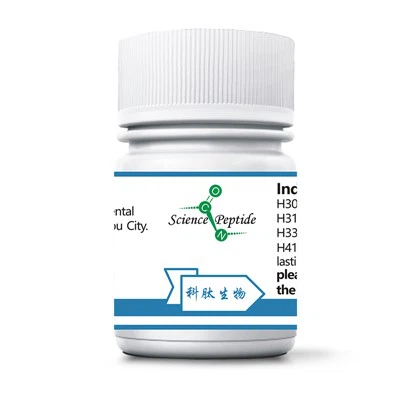
Primary Packaging: Amber glass vials or medical-grade cryogenic vials, vacuum-sealed under dry nitrogen gas to prevent moisture uptake and oxidation.
Shipping Conditions: Shipped worldwide at ambient temperature or on dry ice depending on sequence thermal stability.
Storage Recommendations:
• Long-term storage: -20°C or -80°C in a desiccated environment.
• Reconstituted solutions: Aliquot into single-use portions and store at -80°C to avoid repeated freeze-thaw cycles and peptide degradation.
Frequently Asked Questions

Request a Quote & Custom Synthesis Inquiry
To accelerate your technical evaluation and quotation, please include the following parameters in your inquiry. Our technical team responds within 24 hours with a feasibility review and pricing structure.
Required Information Checklist for RFQ:
Sequence: (Single-letter code, N-terminus to C-terminus)
Quantity: (e.g., 1 mg, 5 mg, 50 mg, 1 g)
Purity Grade: (>= 85%, >= 90%, >= 95%, >= 98%)
Modifications: (e.g., N-terminal Acetylation, C-terminal Amidation, FITC labeling, Disulfide bridge)
Counter-Ion Requirement: (Standard TFA vs. Acetate/HCl salt exchange)
Application Type: (In vitro assay, in vivo animal study, structural analysis)
Secure Sequence Upload: [Submit Sequence / Request Custom RFQ]
As one of the most professional anti-cancer peptides manufacturers and suppliers in China, we also support custom service. We warmly welcome you to wholesale bulk high quality anti-cancer peptides from our factory. If you have any enquiry about cooperation, please feel free to email us.
Goserelin Acetate CAS 145781 92 6, Leuprolide Acetate CAS 1926163 25 8, Triptorelin Acetate CAS 57773 63 4