

Glycopeptide Synthesis | Glycosylated Peptides | O-Linked Glycopeptides | N-Linked Glycopeptides | Science-Peptide
Meta Description
Need glycopeptides for glycobiology research or glycoprotein mimicry?Science-PeptideGlycopeptide Synthesis service covers O-linkage, N-linkage, and introduction of complex glycans.20 years of experience, precise control of glycosylation sites. Please feel free to contact us.
Glycopeptides: simulating real-world glycosylation
Why do you do glycopeptides?
Proteins are rarely "naked" in the body - most carry sugars. Glycosylation affects protein folding, stability, recognition and signaling. If you want to study the function of a glycoprotein, or develop an antibody against a glycan epitope, it's not enough to have a naked peptide, you have to attach the glycans.
The difficulty of Glycopeptide Synthesis lies in the complex structure of the glycan chain itself and the need to ensure the correct site and the integrity of the glycan chain when attached to the peptide; O-conjugation is fine, but N-conjugated glycan chains are much longer, which makes the synthesis difficulty directly doubled. We have stepped into these potholes before, and we know how to get around them.

What we can do
1. Glycosylation Type: Both O- and N-Linkages Are Made
|
Type |
Connection method |
Common Glycoconjugates |
We've done situations where |
|
O-linked glycopeptides |
Sugar-linked to the Ser/Thr side-chain hydroxyl group |
GalNAc,GlcNAc,Gal,Man |
I've done monosaccharides to pentasaccharides, and I've got a stable yield |
|
N-linked glycopeptides |
Sugar-linked to the side-chain amide of Asn |
GlcNAc, high mannose type, complex type |
The longest I've ever done is nine sugars, which requires special protection strategies |
|
Salivary acidification |
with sialic acid at the end |
mimicking natural glycoprotein recognition sites |
Sialic acid drops off easily. We optimized the conditions |
Depending on your research goals, we will push which glycosylation strategy is most appropriate. The first step in Glycopeptide Synthesis is to choose the right sugar chain and linkage.
2. Sugar chain length: from monosaccharides to complex sugar chains
Monosaccharide modification: GlcNAc, GalNAc, Man, Gal, etc., simplest and most successful.
Disaccharides/trisaccharides: e.g. lactose, chitosan, need to be well protected by glycosyl donors.
Complex sugar chains: high mannose type, complex N-glycans, up to nine sugars.
Sialylation: The terminal linkage to sialic acid mimics the recognition site of natural glycoproteins.
3. Point control: precision, no guesswork
What's the biggest fear of glycosylation? Glycoconjugation at the wrong site, or one site is connected but the other site is not. With our orthogonal protection strategy, we can introduce glycosylation at a specific site and leave the other sites intact. Need to glycosylate multiple sites? We can introduce them one by one and control them clearly.
4. Purity: Depending on Experimental Requirements
|
Purity level |
Applicable Scenarios |
|
Conventional pure (85-95%) |
Combining experimental, active primary screening |
|
High purity (95-98%) |
cellular experiments, functional validation |
|
Ultrapure (>98%) |
structural studies, NMR, crystallography |
Each glycopeptide is accompanied by HPLC and MS reports, with data supporting the integrity of the glycan chain and the correct site.
5. Other modifications on glycopeptides
Glycopeptides are complex enough on their own, but some experiments require a little something else:
Fluorescent labeling: FITC, TAMRA, tracking glycopeptide destination.
Biotin:Do pull-down or test.
Phosphorylation: Simultaneous simulation of glycosylation and phosphorylation to study crosstalk.
Isotope labeling: for NMR or mass spectrometry quantification.
Why choose our Glycopeptide Synthesis service?
1. Glycochemistry + peptide synthesis, two-pronged approach
Glycopeptide Synthesis is difficult because it crosses two fields - glycochemistry and peptide synthesis. Those who make sugar may not know peptide, and those who make peptide may not know sugar. We have people on both sides, we prepare the glycosyl donor ourselves, optimize the glycosylation conditions by ourselves, we don't need to outsource, and we can adjust the problems by ourselves.
2. Flexible protection strategies and the integrity of the sugar chain
During glycosylation, the sugar chain itself has to be protected, otherwise the reaction conditions will knock out the sugar. We have various combinations of protecting groups that can stabilize the sugar chain under peptide synthesis conditions, and then leave the sugar intact when it is deprotected in the final step.
3. Site control: connect wherever you want
Single Site Glycosylation: Sugar is introduced at a specified location and left naked elsewhere.
Multi-site glycosylation: different sites can carry different sugar chains, which can be introduced one by one without interfering with each other.
Selective glycosylation: there are multiple Ser/Thr, only one of them is glycosylated - achieved by conservation strategy, not by probability.
4. QC: Is the sugar chain intact? Are the sites correct?
Glycopeptides are more troublesome to quality control than regular peptides::
MS molecular weight: you can tell if the sugar is attached or not by looking at it.
MS/MS to see the site (optional): break up the peptide to see which amino acid the sugar is attached to.
HPLC to see the purity:Also look for impurities of desugarization.
Sugar composition analysis: Measurement of sugar chain composition and linkages when needed.
The data for each glycopeptide is given to you, so you don't have to guess.
5. From milligrams to hundred milligrams, all the way to the end
Milligrams for the screening phase, ten milligrams for the validation phase, a hundred milligrams for the structural study - we can take it all. The same project, the same counterpart, no need to re-harmonize.
What Can Glycopeptides Be Used For?
|
Research areas |
Common Uses |
Glycosylation type |
|
Glycobiology |
Studying how sugar-binding proteins recognize sugar |
O-connection, N-connection |
|
Antibody development |
screening antibodies against glycan epitopes |
complex sugar chains, salivary acidification |
|
Vaccine development |
antigens of sugar-conjugated vaccines |
repeating sugar units, glycopeptide coupling |
|
viral infections |
mimicking viral surface glycoproteins |
N-linked high mannose type |
|
Tumor markers |
abnormally glycosylated peptides |
short-chain O-sugars |
|
signaling pathways |
mechanisms by which glycosylation affects function |
Monosaccharide modification |
|
structural biology |
NMR or crystal structures of glycoproteins |
homogeneous sugar chains, isotopic labeling |
Structural biology NMR/crystal structure of glycoprotein homogeneous sugar chains, isotopic labeling
Delivery and quality control
- Delivery: Lyophilized powder, centrifuge tubes or vials, protected by nitrogen.
- Accompanying documents:COA (HPLC profile + MS profile), MS/MS (confirmation of glycosylation sites).
- Optional tests: peptide content, endotoxin, moisture, sugar composition analysis.
- Customized Packaging: portioning and marking according to your requirements.
- Each Glycopeptide Synthesis product is double-checked before it is sent out to ensure that the sugar chain is complete and the sites are correct.

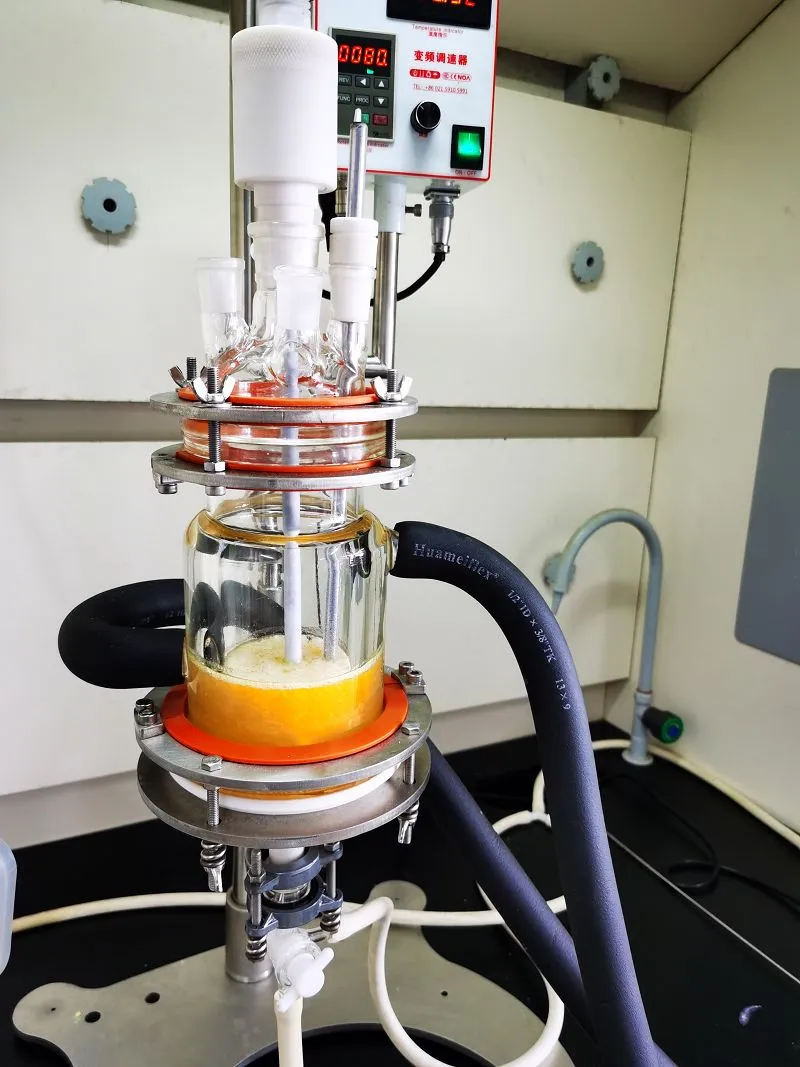

Three real-life cases
Case I: A Glycobiology Institute
The customer needs an O-linked glycopeptide, which is attached to GalNAc at a specific site, for the study of lectin recognition. We used solid-phase synthesis+glycosylation and modification, and finally MS/MS confirmed that the glycopeptide was attached to the specified Ser. The customer used this glycopeptide for SPR and got the binding constant.
Case 2: Vaccine programs of multinational pharmaceutical companies
The customer needed a batch of N-linked glycopeptide with high mannose-type sugar chain for anti-HIV vaccine research. We prepared the glycosyl donor by ourselves, optimized the glycosylation conditions, and delivered the final batch of N-linked glycopeptides with intact glycan chains and purity >95%, so the subsequent immunization experiments of the customer went smoothly.
Case 3: Tumor marker research at a national university
The customer needed a glycopeptide containing sialylated T-antigen to mimic the aberrant glycosylation on the surface of tumor cells. We introduced sialylated GalNAc and ensured that the sialic acid was not lost during the synthesis process. The client used this glycopeptide to screen for specific antibodies.
Now, what about your glycopeptide needs?
Whether you want simple glycopeptides modified with monosaccharides, or complex N-linked glycans, we can talk. At least you don't have to look for someone on both ends when you ask Science-Peptide to do Glycopeptide Synthesis.
I need you to tell me:
peptide sequences
Glycosylation sites and sugar chain structures (references are best)
How much (milligrams)
purity requirements
When do you want it?
Give you a feasibility assessment and quote within 24 hours.