

Overlapping Peptide Library Synthesis | Overlapping Peptide Library | Epitope Mapping Peptide Library | T-Cell Screening Peptide Library | Science-Peptide
Meta Description
Need Overlapping peptide library for epitope mapping or T-cell screening? Science-Peptide provides professional Overlapping peptide library synthesis service, covering the whole protein sequence, with flexible peptide length and overlap, and fast delivery in 2-3 weeks. Welcome to contact us.
Overlapping peptide library: slicing the proteins to find the key segments
Overlapping peptide library?
Anyone who does immunological research knows that the most direct way to find out where an antibody binds to a protein, or which section a T cell recognizes, is to cut the protein into small pieces and try them one by one.
Overlapping peptide library is such a small set of pieces - based on the sequence of the target protein, a series of short overlapping peptides are designed to cover the entire protein. Each peptide shares an overlapping region with its neighboring peptides, ensuring that no possible epitope is missed.
An example:A protein of 300 amino acids, designed as a 15 amino acid peptide, overlapping 11 amino acids, then the first peptide is 1-15, the second is 5-19, and the third is 9-23 covering all the way to the end.
This kind of design is common in immunology: th:
- Antibody epitope mapping: find out where antibodies actually bind
- T-cell epitope screening: to find out which fragments are recognized by T cells
- Vaccine development: screening for candidate epitopes that induce immunoprotection
- Autoimmune disease research: identifying targets that attack themselves

What we can do
1. Peptide library design: help you calculate the parameters
Anyone who has done overlapping peptide library knows that the choice of peptide length and overlapping degree directly affects the experimental results. If the peptide is too short, the conformational epitope may be missed; if it is too long, the synthesis will be difficult and costly. We will give you a solid suggestion according to your research purpose:
|
Parameters |
Common range |
We generally push like this |
|
peptide length |
8-20 amino acids |
15mer is the most commonly used, balancing coverage and synthesis efficiency |
|
degree of overlap |
5-15 amino acids |
11 amino acids overlap, ensuring no omissions |
|
Coverage |
the entire length or a specific area |
The first time we do it, we recommend the full length, but later on, we can finesse it |
|
Modification |
Biotin, FITC, etc |
Add as much as you need for the experiment, just say so in advance |
We can handle special situations:
- Cysteine-rich regions: easily form disulfide bonds, can be replaced with Ser or Ala
- Where hydrophobicity is high: poor solubility, add some labeling or shorten peptide length
- Known non-functional areas: skip them, save money and time
2. Synthetic Capacity: from a Few Dozen to a Few Hundred
|
Project |
Capacity |
|
Flux |
single lot of 10-500 peptides |
|
peptide length |
5-30 amino acids (common range for overlapping peptide libraries) |
|
Purity |
Crude (70-85%), regular pure (85-95%), high pure (95-98%) |
|
Single-strip output |
0.5 mg to 100 mg |
|
form of delivery |
96-well plates, individual centrifuge tubes, syringes |
|
Periodicity |
96 peptides in 2-3 weeks, large quantities can be delivered in batches |
3. Quality control: every peptide is documented
For every peptide in the Overlapping peptide library, we give:
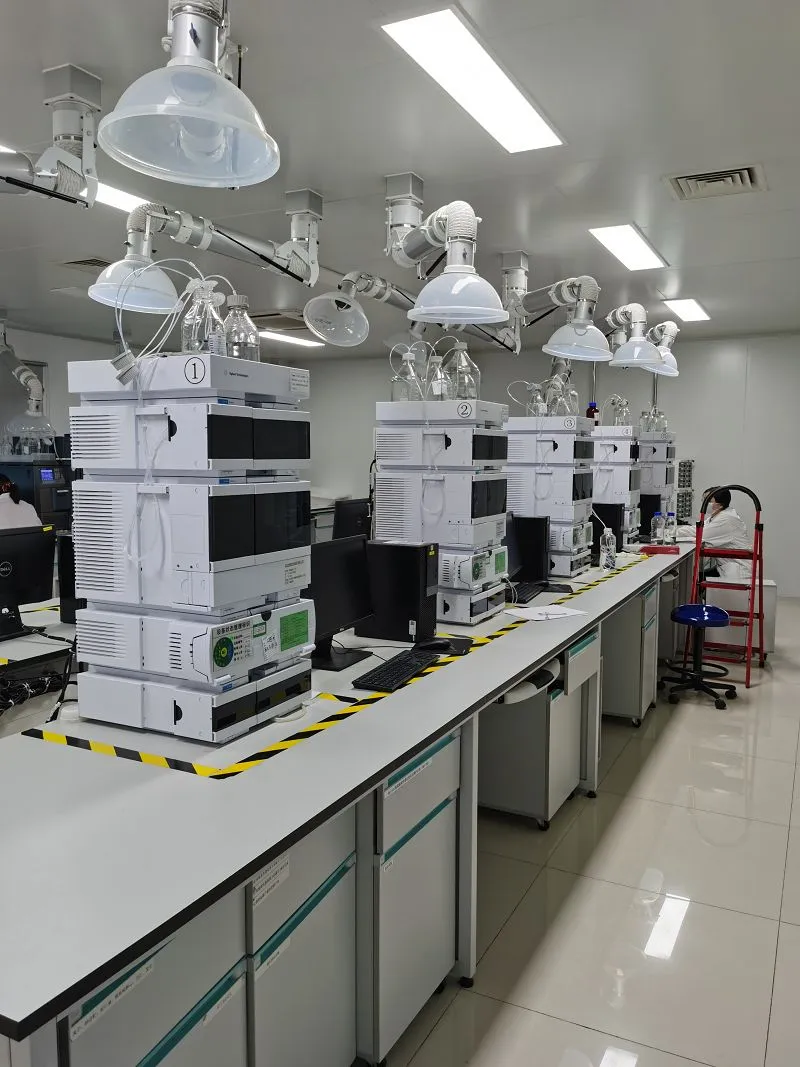
- MS mass spectrometry: molecular weights at a glance
- HPLC purity: crude or purified, data speak for themselves
- COA report: one peptide at a time, searchable by pore position or sequence
Want to do more? Yes:
- Peptide Content Measurement: If you want to quantify accurately, do this
- Solubility Test: Tells you what solvent to use to dissolve
- Amino acid composition analysis: to confirm the ratio of each amino acid
Overlapping peptide library?
1. We've been doing this for 20 years
Overlapping peptide library sounds like "one batch of peptide", but there are still a lot of details to achieve stable batch, complete data and on-time delivery. Over the years, we have done hundreds of Overlapping peptide library projects for our customers, ranging from dozens of peptides to hundreds of peptides, and the process has been running smoothly for a long time.
2. High flux, also fast
For a standard library of 96 peptides, it takes 2-3 weeks, and for a library of about 200 peptides, 3-4 weeks. If the project is urgent, it can be divided into batches - half of the library can be taken first to start the experiment, and the rest can be added one after another, without waiting.
3. Purity on demand, without waste of money
Crude (70-85%): for initial screening, see which bars have signals first, save money.
Routine pure (85-95%): most cell experiments, cost-effective enough.
High purity (95-98%): For quantitative or in vivo experiments, the results are more stable.
4. Complete data, no worries about publication
The MS and HPLC data of each peptide will be given to you, organized in Excel, so that you will know exactly which peptide corresponds to which well, what is the purity, and whether the molecular weight is correct or not. When you write an article, you can put it into the Supplementary Information, so you don't need to organize it by yourself.
5. Need a modifier? You can add that, too
Some experiments require labeled peptides:
Biotin labeling: do streptavidin capture or detection
FITC labeling: for fluorescence detection
Phosphorylation modifications: a study of phosphorylation-dependent recognition that
When you synthesize it, you can add it in directly, so you don't have to come back and do it again.
Where are overlapping peptide libraries used?
|
Research areas |
Uses |
Our recommended library design |
|
Antibody epitope mapping |
looking for precise localization of antibody binding |
15mer, overlapping 11-12 amino acids |
|
T-cell epitope screening |
Look for peptides that are recognized by T cells |
MHC 8-11mer for Class I, 15mer for Class II |
|
Vaccine development |
sieve protective antigenic epitopes |
full-length coverage |
|
autoimmune diseases |
looking for self-reactive T-cell targets |
disease-associated protein full-length or specific regions |
|
Tumor Immunity |
neoantigen screening |
tumor mutation regions |
|
protein interactions |
Looking for binding structural domains |
Target area, overlapping design |
Delivery and quality control
Form of delivery:
Individual centrifuge tube dispensing
Accompanying documents:
Excel summary table (sequence, MW, purity, MS file links for all peptides)
Independent COA for each peptide (PDF)
library design summary report
Optional: solubility data, peptide content, amino acid composition analysis
Before each Overlapping peptide library is sent out, we check to make sure that the number of peptides is correct and the data is complete.
Three real-life cases
Case 1: Epitope mapping in a biotechnology company
The client was developing a therapeutic antibody and needed to identify binding epitopes. The target protein is 450 amino acids, and we designed an overlapping peptide library of 120 peptides (15mer, overlapping 11aa), which was delivered in 2.5 weeks. The customer used ELISA to screen the peptide library and locked the epitope region within three days, and the project moved forward smoothly.
Case 2: T-cell screening at a research institute
Our client studied the T cell response after viral infection and needed an overlapping peptide library covering 300 amino acids of the virus. we synthesized 96 peptides (15mer, overlapping 11aa) with >85% purity. We synthesized 96 peptides (15mer, overlapping 11aa) with >85% purity, and stimulated PBMC with these peptides and identified several immunogenic peptides, which were later published.
Case 3: Tumor neoantigens from a vaccine development company
The client identified 20 mutation sites in the patient's tumor samples and needed to synthesize an Overlapping peptide library covering these regions, with a total of ~150 peptides, partially labeled with biotin. We delivered in 4 weeks with >95% labeling efficiency. They used these peptides to screen patient T-cell responses and selected three new antigen candidates for vaccine development.
Talking about your overlapping peptide library needs?
Whether for epitope mapping, T-cell screening, or vaccine development, we can help you design and synthesize high-quality Overlapping peptide libraries.
I need you to tell me:
Protein sequence (or UniProt ID)
Peptide length and overlap (we can help you design this)
Number of peptides (approximate range)
Purity requirements
Need for modification (biotin, FITC, etc.)
How much to ask for (milligrams per peptide)
Give you a quote and delivery plan within 24 hours.