

Scrambled library | Explore Sequential Effects | Functional Variant Screening | Peptide Library Customization | Science-Peptide
In the study of proteins and peptides, the order of amino acid sequences often determines their structure and function. When you already have an active parent peptide and want to explore the effect of sequence on activity, or find new sequences with similar function while keeping the amino acid composition unchanged, the Scrambled Library (Shuffled Peptide Library) becomes the ideal tool. Based on more than 20 years of experience in peptide synthesis, Science-Peptide provides you with customized Scrambled library construction services - by randomly disrupting the amino acid sequence of a given sequence or recombining multiple parent peptide fragments to generate a diverse collection of sequences, which is useful for conformational relationship studies, functional optimization and novel ligand discovery.
What is the Scrambled library?
Scrambled library refers to a mixture of peptides constructed by randomly reorganizing their amino acid order or fragment combinations using one or more parent peptide sequences as templates. Unlike completely randomized peptide libraries, the amino acid composition of a Scrambled library is often constrained (e.g., by keeping the amino acid species and number of the parent peptide constant, and only disrupting the order), so that sequential effects can be examined while controlling the composition. Such libraries can be used to:
Determining the positional dependence of key residues in the parent peptide
Screening for alternative peptides with similar activities but different sequences
studying the sequential conservation of protein structural domains or modalities
optimizing the stability, affinity or selectivity of peptides
Scrambled libraries can be categorized into two types, depending on how they are designed:
Full Sequence Rearrangement Library: The amino acid sequence of the parent peptide is completely randomized to generate all possible permutations (or random sampling). For example, a 5-peptide (containing 5 different amino acids) can generate 120 permutations.
Fragment Rearrangement Library: The parent peptide or homologous sequence is divided into a number of fragments, and then these fragments are randomly combined to produce chimeric sequences.

How does Science-Peptide build Scrambled libraries?
The core of building a Scrambled library lies in how to achieve true "random rearrangement" in the synthesis, while controlling the library size and sequence distribution. We use a combinatorial synthesis strategy combined with solid-phase peptide synthesis to precisely construct high-quality Scrambled libraries for you.
1. Design consultancy
You provide the parent peptide sequence (single or multiple) and the rearrangement rules (whether to allow duplicate amino acids, whether to keep the amino acid composition unchanged, how to divide the fragments, etc.). Our technical team will recommend the most suitable rearrangement strategy according to your goal, and evaluate the theoretical library capacity and synthesis feasibility.
2. Sequence set generation
Depending on the design, we algorithmically generate all possible permutations or perform random sampling to control the library size. For large libraries (e.g., more than 10⁶), a "mix-and-match synthesis" strategy can be used, in which amino acid combinations are randomly introduced during synthesis instead of pre-generating each sequence.
3. Synthetic strategy options
One-by-one synthesis method: When the library is small (e.g. <1000 species), each sequence can be synthesized separately and mixed to make a library. This method makes the sequences clear and easy for subsequent analysis.
Mixed synthesis: For the Scrambled library with large library capacity, we simultaneously coupled multiple amino acids at each variable position (mixed according to the designed ratio), and obtained the mixture of all the sequences through one round of synthesis. This method is highly efficient, but requires precise control of the amino acid mixing ratio to ensure the uniformity of sequence distribution.
Fragment coupling method: For fragment rearrangement libraries, each fragment is synthesized separately, and then the fragments are assembled in random order on the resin to obtain chimeric libraries.
4. Quality control
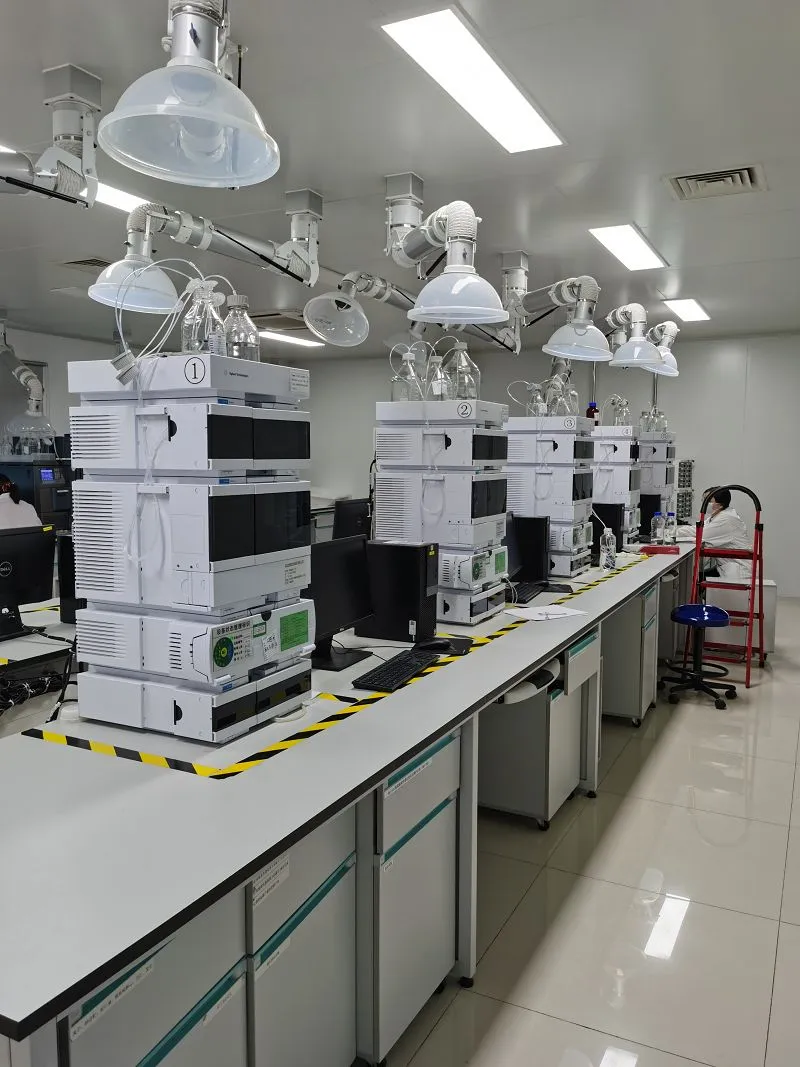
HPLC analysis: Observe the overall distribution of the peptide library and confirm that there is no obvious dominant peak (to avoid synthesis bias).
Mass Spectrometry Identification:Verify that the molecular weight range is consistent with the theoretical distribution.
Amino acid composition analysis: Ensure that the overall amino acid ratio after rearrangement is consistent with the design.
5. The form of delivery
Provide lyophilized powder (can contain carrier), solution, or coupled with biotin, fluorescent markers, carrier proteins, etc., according to the need, so as to facilitate direct use in screening.
Technical Parameters and Customization Capabilities
|
Parameters |
Description |
|
parent peptide length |
3-30 amino acids (longer sequences to be evaluated) |
|
reservoir size |
10¹ - 10⁸ (depending on design) |
|
Rearrangement |
full-sequence randomized disruption, randomized combination of segments, fixed-position randomization, etc |
|
Amino acid composition |
may fix the composition of the parent peptide or allow for specific variations |
|
synthetic scale |
milligram to gram mixtures |
|
Optional modifiers |
Biotin, FITC, phosphorylation, glycosylation, PEGylation, etc. (need to specify location) |
|
QC options |
HPLC profiling, mass spectrometry analysis, amino acid composition analysis, NGS validation |
Scrambled library application scenarios
Structure-effect relationship studies
When you find that a peptide has a specific activity and you want to know if the amino acid sequence is critical, constructing a Scrambled library and screening it can quickly identify the sequential motifs that maintain the activity, or determine which positions are critical for function.
Functional optimization and development of alternative peptides
In some cases, the parent peptide may not be suitable for direct application due to poor stability, high immunogenicity or synthesis difficulties. By constructing a Scrambled library, it is possible to screen alternative peptides with similar functions but better sequences.
Epitope modeling and vaccine design
For conformational epitopes, their activities are dependent on specific spatial arrangements. By constructing a Scrambled library based on known epitope sequences, linear peptides that mimic the conformation of natural epitopes can be screened for use in vaccine development or diagnostic reagents.
Protein interaction interface resolution
In protein-protein interactions, the binding interface often consists of multiple key residues whose relative positions may be important. Scanning the interface sequences using a rearrangement library can reveal the contribution of residue alignment to the binding affinity.
Peptide drug screening
In the lead peptide optimization stage, the construction of a Scrambled library can help to explore the sequence space and identify variants with higher activity or better selectivity.
Why choose Science-Peptide's Scrambled library?
1. Professional design experience
We have constructed various Scrambled libraries for many domestic and foreign pharmaceutical companies and research institutes, covering antimicrobial peptides, cell-penetrating peptides, receptor ligands and other types of peptides. We understand the requirements of different research objectives and can provide professional advice on rearrangement strategies.
2. Flexible synthesis strategies
Depending on the library size and sequence complexity, we can flexibly choose one-by-one synthesis, hybrid synthesis, or fragment assembly to strike a balance between cost, cycle time, and quality. For large-scale rearrangement of libraries, we have a mature "hybrid synthesis" process to ensure the uniformity of sequence distribution.
3. Rigorous quality control
In addition to routine HPLC and MS, we especially recommend NGS validation, which provides you with quantitative data of sequence distribution, so that you can have a clear idea of the quality of the library. All QC results are summarized in a COA report for clear traceability.
4. One-stop shop
From design, synthesis, quality control to downstream application support (e.g., labeling, coupling), we are involved in the entire process to ensure that the Scrambled library fits seamlessly into your screening platform. We can also assist you in the identification and re-synthesis of positive clones after screening.
5. Intellectual property protection
All projects have signed a confidentiality agreement, your parent peptide sequence, design concept and research objectives are only known to the project team, and the data management meets the information security standards.
Customer Cases
A university laboratory
We studied the sequence effect of an antimicrobial peptide (12 amino acids). We constructed a fully Scrambled library based on this sequence (about 4.79 million alignments by hybrid synthesis method). Customer screening revealed that some of the rearranged sequences retained the antimicrobial activity but with reduced hemolytic toxicity, which provided a new direction for subsequent optimization.
Biotech
An antagonist peptide targeting PD-1 needs to be optimized. Based on its parent peptide, we constructed a fragment rearrangement library (dividing the sequence into three fragments randomly combined) with a library capacity of about 10⁴. Customers were screened by SPR to obtain two variants with a 5-fold increase in affinity.
Multinational pharmaceutical company
We studied the recognition motifs of a kinase substrate peptide. We constructed a position-specific rearrangement library (fixing two phosphorylation sites and randomly rearranging the other sites), and combined with NGS validation, we helped the client to identify the preferred sequence characteristics of the kinase.
Inquire today to customize your Scrambled library
Whether you want to explore the sequential mysteries of the parent peptide or explore alternative sequences with better functionality, the Scrambled library can open up new dimensions of research for you.Science-Peptide is looking forward to cooperating with you to provide reliable support for your projects with professional synthesis technology and rigorous quality control.