

Stable Isotope Labeled Peptide | Isotope Labeled Peptide | ¹³C Labeled Peptide | ¹⁵N Labeled Peptide | Peptide for Mass Spectrometry | Science-Peptide
Meta Description
Need stable isotope labeled peptide for mass spectrometry quantification or internal standard? Science-Peptide provides professional stable isotope labeled peptide synthesis service, ¹³C, ¹⁵N, ²H single labeled or multi-labeled, abundance >99%, purity >95%, high resolution MS validation. Inquiries are welcome.
Stable Isotope Labeled Peptides: More accurate quantification, more reliable results
Why stable isotope labeled peptides?
Anyone who does proteomics or metabolomics knows that internal standard is the key to accurate mass spectrometry quantification. Stable isotope labeled peptides are chemically identical to natural peptides, but a little heavier, and can be separated by mass spectrometry, which is the gold standard for absolute quantification.
Where are stable isotope labeled peptides used?
Absolute quantification by mass spectrometry: as an internal standard to correct for matrix effects and ionization efficiency.
SRM/MRM method development: establish quantitative methods, optimize mass spectrometry parameters
Metabolic flow analysis: to trace metabolic pathways and calculate fluxes
Protein hydrolysis kinetics: to study the efficiency of enzymatic cleavage
Clinical diagnostics: establish quantitative methods for disease markers.

What We Can Do
1. Isotope Types, Depending on What You Need
|
Isotope |
Labeling position |
Mass increase |
Scenarios |
|
¹³C |
Amino acid backbone carbon |
Based on the number of carbon atoms |
Most commonly used, significant shift in mass spectrum |
|
¹⁵N |
Amide or side chain nitrogen |
Each nitrogen + 1 |
Dual-labeling with ¹³C |
|
²H (D) |
Hydrogen atoms |
+1 per deuterium |
Cheap, but may have chromatographic shift |
|
¹⁸O |
C-terminal carboxy oxygen |
+2 |
Labeling after cleavage, good for tryptic peptides. |
2. Labeling Method, Depends on How Many Weights You Need
|
Labeling type |
Description |
When to use |
|
Single labeling |
Only one isotope is labeled, e.g., ¹³C |
Routine quantification, cost-controlled |
|
Double labeling |
Higher mass shift, e.g., ¹³C+¹⁵N |
Avoids overlap with natural peptide isotope peaks |
|
Full labeling |
All amino acids labeled |
Metabolic flow studies, rare |
|
Spot labeling |
Position-specific labeling, e.g., Lys-¹³C at a certain position |
Special needs, design required |
3. labeled peptides we can synthesize
Single-labeled amino acids: e.g. ¹³C6-Arg, ¹³C5-branched-chain amino acids, ¹⁵N2-Lys, etc.
Double-labeled amino acids: e.g. ¹³C9,¹⁵N-Tyr, ¹³C6,¹⁵N4-Arg
Deuterium labeling: e.g. d3-Ala, d10-Leu, etc.
C-terminal ¹⁸O labeling: labeling after digestion, for tryptic peptides
4. Synthesis Capability
|
Programs |
Capability |
|
Peptide length |
5-30 amino acids (isotope labeling of amino acids is costly, suitable for short peptides) |
|
Labeling site |
Single or multiple labeled amino acids can be specified |
|
Isotope abundance |
>99% |
|
Purity Options |
Regular purity (95-98%), high purity (>98%) |
|
Yield per strip |
0.5-10 mg (depending on peptide length and labeling complexity) |
|
Delivery format |
Centrifuge tubes, vials |
|
Cycle time |
2-4 weeks (customized labeling of amino acids is required) |
5. Quality control: to confirm the correct labeling and purity of peptides
The quality control of stable isotope labeled peptides depends on two key points: whether the labeling is correct or not, and whether the purity is sufficient or not.
High resolution MS: accurate mass count confirmation, to see if the labeling is complete.
HPLC: look for purity, and also look for unlabeled peptide residues.
Amino acid analysis: optional, to confirm the ratio of labeled amino acids.
Why do you need us to do stable isotope labeling peptide?
1. We have been doing this for 20 years
Stable isotope-labeled peptide sounds like "synthesized with heavier amino acids", but labeled amino acids are expensive, diverse, and have special reaction conditions, so it is different from ordinary synthesis. Over the years, we have helped our customers to make various kinds of labeled peptides: from the simplest ¹³C single-labeling to the complex ¹³C+¹⁵N double-labeling, and from small peptides to medium-length peptides, we have accumulated experience.
2. We have a full range of labeled amino acids
¹³C labeling: alanine, arginine, isoleucine, leucine, lysine, phenylalanine, proline, threonine, tyrosine, valine, and so on.
¹⁵N labeling: single or double labeling of ¹⁵N for various amino acids
Deuterium labeling: d3-Ala, d3-Leu, d5-Phe, d10-Leu, etc.
Double labeling: ¹³C+¹⁵N combination with greater mass shift
3. Guaranteed abundance, no half-assed peptides.
What is the biggest fear of stable isotope labeled peptides? Incomplete labeling, mixing with unlabeled peptides, and then the quantification will not be accurate. We use labeled amino acids with >99% abundance, strictly control the synthesis process, and finally confirm that there is no unlabeled peptide residue by high-resolution MS.
4. Purity on demand, no waste of money
Conventional purity (95-98%): enough for mass spectrometry quantitative method development and internal standard.
High purity (>98%): clinical diagnostic standards, absolute quantification, more stable results.
5. Complete data, labeling can be traced.
We provide high-resolution MS data for each labeled peptide, and the accurate mass number is matched to prove that the labeling is correct.
6. All the way from method development to clinical testing.
After finding a good labeled peptide internal standard, there is often a need for more follow-up work: such as amplification of the synthesis, the establishment of a GMP version for clinical diagnosis. science-Peptide can be seamless, the same project manager to follow to the end, no need to repeat the communication.
Stable Isotope Labeled Peptides
|
Research area |
How to use |
Recommended Labeling Types |
|
Proteomics |
SRM/MRM Absolute Quantification |
¹³C or ¹³C+¹⁵N marking |
|
Metabolomics |
Metabolic Flow Analysis |
Fully labeled or specifically labeled |
|
Clinical Diagnostics |
Disease Marker Quantification |
High purity, ¹³C labeling |
|
Pharmacokinetics |
Peptide Drug Quantification |
¹³C or ²H marking |
|
Enzyme Kinetics |
Quantification of Enzyme Cleavage Products |
¹⁸O labeling (C-terminal) |
Delivery and Quality Control
- Delivery: lyophilized powder, centrifuge tubes or vials
- Accompanying documents: COA (HPLC purity map, high-resolution MS mass spectrometry), synthesis report (optional)
- Optional tests: amino acid analysis, peptide content, endotoxin
- Customized Packaging: As per your requirement, labeling and packaging
Before each stable isotope labeled peptide is shipped, we will review the labeling, purity and molecular weight to ensure complete data and reliable quality.
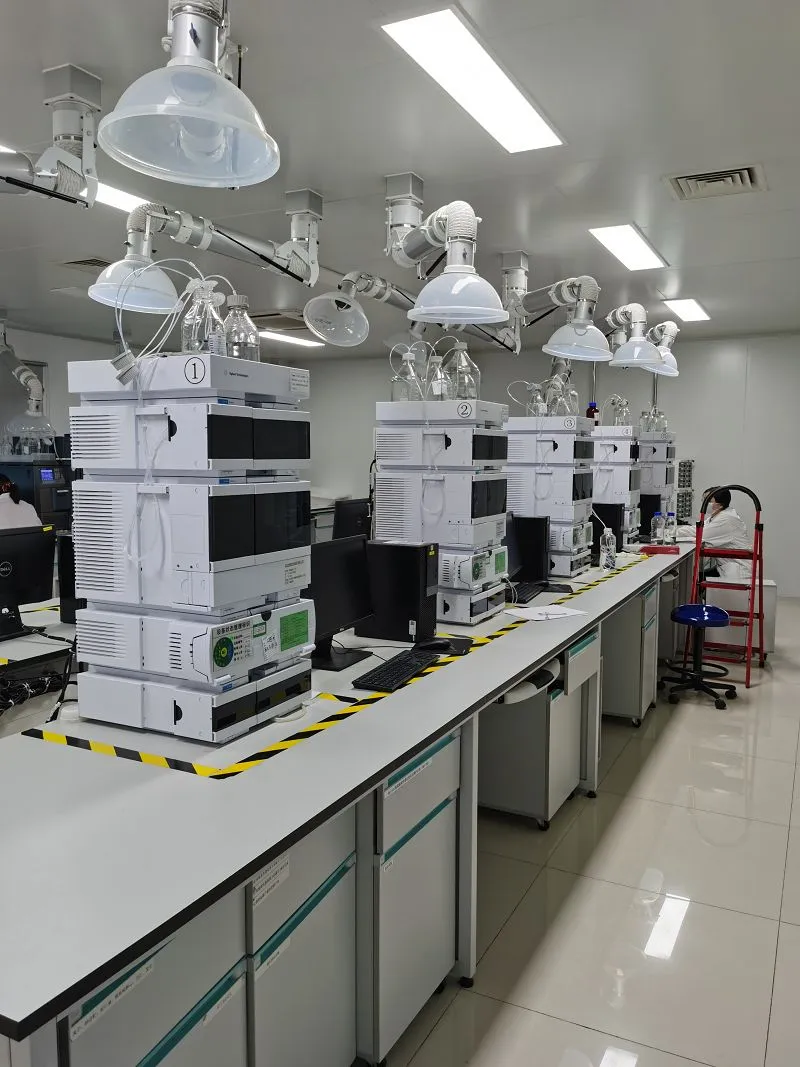


Three real cases
Case 1: Internal labeling project of a proteomics platform.
The customer needed to establish MRM quantification methods for 10 biomarkers in plasma, and the corresponding stable isotope-labeled peptides were required as internal standards. We synthesized 10 ¹³C6-Arg-labeled peptides (each labeled with Arg at the C-terminus) with abundance >99% and purity >95%. The client established a quantitative method using these internal standards with a linear range of 3 orders of magnitude.
Case 2: Pharmaceutical company's PK research program
The client is developing a therapeutic peptide and needs to do pharmacokinetic study, so it needs to synthesize an isotope-labeled version of the peptide as an internal standard. We synthesized ¹³C5,¹⁵N1-Val labeled peptide and introduced a labeled amino acid into the sequence. High-resolution MS confirmed the complete labeling, and the client successfully measured the drug concentration in plasma by LC-MS/MS.
Case 3: Metabolism research project
To study the metabolism of branched-chain amino acids, the customer needed short peptides labeled with ¹³C6-Leu and ¹³C5-Val as tracers. We synthesized Leu-Val-Phe tripeptides, which were labeled with ¹³C at the Leu position and Val position, respectively, and successfully tracked the metabolic fluxes of these peptides in cellular uptake experiments.
What are your stable isotope labeled peptide needs?
Whether you are doing proteomics quantification, pharmacogenetic studies, or metabolic flow analysis, as long as you need to label peptide internal standard, you can talk to us.
What you need to tell me:
Peptide sequence
Which amino acid you want to label (position and type of labeling)
Isotope type (¹³C, ¹⁵N, ²H, etc.)
How much is needed (mg)
Purity requirements
Give you a detailed quote and feasibility feedback within 24 hours.