

Truncation Peptide library | Truncation Peptide library Synthesis | Minimal Active Fragment Screening | Peptide Truncation Library | Science-Peptide
Meta Description
Need to find out the smallest active fragment of a peptide? Science-Peptide provides professional Truncation Peptide library synthesis service, with stepwise truncation from the N-terminal, C-terminal, or both ends, rapid delivery, and help you pinpoint the functional core region. Welcome to contact us.
Peptides too long? Costly? Truncation Peptide library helps you to find the shortest effective sequence
What is the Truncation Peptide library?
You have a peptide on hand that has good activity, but is too long - expensive to synthesize and not yet stable. You want a shorter version, but don't know where to start cutting.
This is what the Truncation Peptide Library does. It cuts off amino acids from the N-terminal, C-terminal, or both ends of the parent peptide step by step, and cuts out a series of shorter and shorter peptides, and then measures the activity of each one of them until it finds the smallest active fragment that is "no shorter than the shortest one".
This works particularly well in the following scenarios:
- Minimum Active Fragment Screening: Identify the shortest sequence necessary to maintain activity
- Drug optimization: shorten peptide chain, reduce cost, improve stability
- Constituent relationship studies: looking at which amino acids are dispensable at both ends
- Epitope fine-tuning: identification of core regions for antigen recognition

What we can do
1. Multiple Truncation Methods, as Required
|
Truncated manner |
Description |
Application scenarios |
|
N-terminal truncation |
cutting amino acids one by one from the N-terminus |
See which residues at the N-terminus are non-essential |
|
C-terminal truncation |
Cutting amino acids one by one from the C-terminus |
See which residues are non-essential at the C-terminal |
|
Shortened at both ends |
Cut both ends at the same time |
Quickly narrowed down |
|
internal truncation |
Keep the ends, cut the center |
Infrequent, special needs |
An example is a 10 amino acid peptide with the sequence YGRKKRRQRRR.
N-terminal truncated banks: 1st cut off Y (GRKKRRQRRR), 2nd cut off G (RKKRRQRRR), and so on
C-terminal truncated bank: 1st cut off R (YGRKKRRQRR), 2nd cut off R (YGRKKRRQR), and so on
2. Pool Design: Step-By-Step Truncation, Covering the Entire Length
|
Parameters |
Description |
|
parent peptide length |
5-50 amino acids |
|
truncated manner |
N-terminal, C-terminal or both |
|
Cutting off step lengths |
Usually 1 amino acid is cut at a time, but it is possible to cut more than one at a time |
|
Minimum length |
Generally 3-5 amino acids are retained, depending on the situation |
|
Control peptides |
Parent peptide sequence (optional) |
3. Synthetic Capabilities
|
Project |
Capacity |
|
peptide length |
3-50 amino acids (truncated) |
|
library size |
10-100 peptides (depending on parent peptide length and truncation method) |
|
The purity option |
Crude (70-85%), regular pure (85-95%), high pure (95-98%) |
|
Single-strip output |
0.5-10 mg (adjustable as needed) |
|
form of delivery |
96-well plates, individual centrifuge tubes, syringes |
|
Periodicity |
1-2 weeks for up to 20 peptides, 2-3 weeks for larger quantities |
4. Quality control: data for each peptide
For each peptide in the Truncation Peptide Library, we offer:
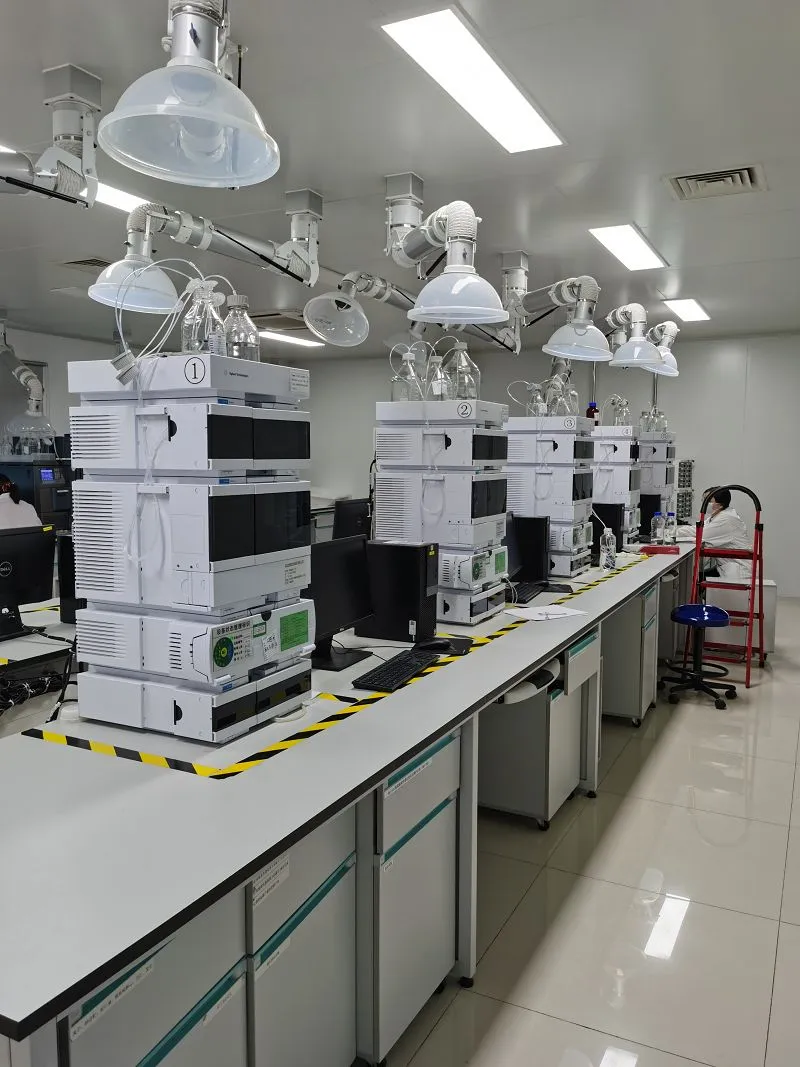
MS Mass Spectrometry: Confirmation of correct molecular weight (any change in molecular weight after truncation counts as good)
HPLC purity: crude or purified purity data
COA report: one per peptide, searchable by length or truncation
Optional services:
Peptide Content Measurement: If you need accurate quantification, do this
Solubility test: Recommendation of suitable solvents
Amino acid composition analysis: Confirmation of correct sequence
Why did you come to us for the Truncation Peptide library?
1. We've been doing this for 20 years
Truncation Peptide library sounds like "a batch of shorter and shorter peptides", but there are a lot of details to make sure that each peptide is correct, the purity is consistent, and the delivery is on time. Over the years, we have helped our customers to make various kinds of truncation libraries, ranging from 10 peptides to 100 peptides, and the process has been smooth for a long time.
2. The cut-offs are flexible and can be done in any manner
Some companies only do single-ended cutoffs, and they're blind to any other way of doing it. We're different:
N-terminal truncation: routine operation
C-terminal truncation: as skillful as
Both ends are simultaneously truncated short:you can design combinatorial libraries that
Unequal step truncation: a large step of coarse screening followed by a fine step of precise localization
3. Purity on demand, without waste of money
Crude (70-85%): for initial sieving, to see which lengths are still active and to save money.
Regular pure (85-95%): most of the activity experiments, cost-effective enough.
High purity (95-98%): Needed for precise quantification or structural studies, more stable results.
4. Data integrity and credibility of results
The MS and HPLC data of each peptide will be given to you and organized in Excel, which length corresponds to which peptide, what is the purity, and whether the molecular weight is correct or not, all of which are clear. You can use them directly when you write articles.
5. Need a modifier? You can add that, too
Some experiments require labeled peptides for detection:
Biotin labeling: to facilitate capture or detection
FITC labeling: for fluorescence detection
Phosphorylation modification: study of phosphorylation-dependent activity of
When you synthesize it, you can add it directly, so you don't have to come back and do it again.
6. Follow through from screening to validation
After finding the smallest active fragment, it is often necessary to do more follow-up work, such as optimizing the sequence, scaling up for animal experiments, and developing the process, Science-Peptide can seamlessly connect these stages - the same project, the same counterpart, no need to re-adjust.
Where Are Truncated Peptide Libraries Used?
|
Research areas |
Common Uses |
Recommended truncation |
|
Antimicrobial peptide research |
Finding the shortest sequence with antimicrobial activity |
Shortened at both ends |
|
cell-penetrating peptides |
identifying core fragments that penetrate the membrane |
N-terminal + C-terminal truncated |
|
antibody epitope analysis |
locating the region of minimal antigen recognition |
N-terminal truncation or C-terminal truncation |
|
enzyme-substrate interactions |
Determination of the substrate minimum recognition sequence |
Shortened at both ends |
|
Peptide drug optimization |
Shorten the peptide chain and reduce the cost |
Shortened at both ends |
|
Hormone analog development |
Finding the smallest fragment that maintains the activity of |
N-terminal + C-terminal truncated |
Delivery and quality control
Form of delivery:
96-well plate (one peptide per well, lyophilized powder, labeled with truncation method and length)
or individual centrifuge tube dispensing (on demand)
Labeling information: truncation mode, length, sequence, molecular weight, purity
Accompanying documents:
Excel summary table (sequence, MW, purity, MS file links for all peptides)
Independent COA for each peptide (PDF)
Library design summary report (describing how each peptide corresponds to a truncation and its length)
Optional: solubility data, peptide content determination
Before each Truncation Peptide Library is sent out, we check to make sure that the truncation method is correct, the number of peptides is correct, and the data is complete.
Talking about your Truncation Peptide library needs?
Whether you are looking for the smallest active fragment of an antimicrobial peptide or pinpointing an antibody epitope, we can help you design and synthesize high-quality Truncation Peptide libraries.
I need you to tell me:
parent peptide sequence
Truncation method (N-terminal, C-terminal or both)
Truncation step (1 or more cuts at a time)
minimum retention length
Do you need to add the parent peptide control
How much of each peptide to
purity requirements
Need for modification (biotin, FITC, etc.)
When do you want it?
Give you a quote and delivery plan within 24 hours.